We may earn a commission when you buy through links on this page, at no extra cost to you; see our Affiliate Disclosure.
As a parent, choosing a twin mattress for your child is an important decision. With so many options available, do your homework first and consider your child’s needs and preferences. Read on to learn what a good twin mattress for kids should have, what to check before you buy, including the federal rules for bunk beds, and then compare the twin mattresses in our selection below.Disclaimer: This article is for general information and is not medical advice. Talk to your pediatrician about your child’s sleep.

Key Specs Compared
Numbers match the reviews below (tap to jump).
| # | Type | Height | Feel | CertiPUR-US | Fiberglass-free |
|---|---|---|---|---|---|
| 1 | Memory foam | 8" | 2-sided (ages 3–7 / 8–12) | Yes | Yes |
| 2 | All-foam | 10" | Medium | Yes | Yes |
| 3 | Memory foam | 6" | Medium firm | Yes | Yes |
| 4 | Gel memory foam | 5" | Firm | Yes | Yes |
| 5 | Memory foam | 5" | Plush | Yes | Yes |
| 6 | Hybrid (Bonnell coils) | 10" | Medium | Yes | Yes |
✓ yes · ✗ no · – not confirmed · Specs as stated on the Amazon listing or by the maker · Not a treatment for any condition
Safety first
- Not for babies. A twin mattress is not a safe sleep surface for a baby under 1. Babies should sleep on their backs on a firm, flat crib, bassinet or play yard mattress.[1]
- Bunk beds: children under 6 should not sleep on the upper bunk. Use the mattress size and maximum thickness the bunk bed maker lists, so the guardrails stay at least 5 inches above the top of the mattress.[2][3]
- Fit: a twin mattress is about 38 x 75 inches. It should fill the bed frame with no gap a child could slip into.
The Importance of the Right Mattress for Your Kids
Good sleep matters for everyone, and especially for growing children. Choosing the right mattress for your child is mostly about comfort and a supportive surface that stays flat and doesn’t sag, so they can sleep well. There is no medical evidence that one mattress type or firmness sets up a child’s lifelong posture or prevents back problems in adulthood. Pick a mattress your child finds comfortable. Sleeping well helps children feel refreshed when they wake up the next day. Some children have allergies or sensitive skin. Look at what the mattress and cover are made from and which certifications the maker states, and ask your pediatrician if your child has allergies or eczema. A good mattress is one part of healthy sleep habits that keep your child happy and rested.Kid Mattress Shopping Buying Considerations
Here are a few important things to consider before buying a mattress for your child.- Your Kid’s Age, Size, and Bed – get a mattress that fits the bed frame with no gaps. A twin mattress is about 38 x 75 inches. Thicker mattresses suit standard bed frames, while thinner ones (often 5 to 6 inches) are common on bunk and trundle beds. Bunk bed instructions must state the maximum mattress thickness, so check it before you buy.[2]
- Allergies or Sensitivities – if your child is very sensitive or has allergies, you may prefer natural fabrics and certified materials (see the labels below). No label means a mattress is allergy-proof.
- Removable Cover – handy for accidents. Some mattresses have a fire barrier made with fiberglass under the cover; never remove a cover the label says to keep on. If you want to wash the cover, choose one the maker lists as removable and fiberglass-free.
- Flammability – every mattress sold in the US must meet the federal open-flame standard, 16 CFR 1633.[4]
Features of a Good Twin Mattress for Kids
Here are some mattress features to be aware of before buying a mattress for your child:- Memory Foam – this foam softens with body heat and contours to your body shape when you lie on it. Many people find it comfortable. Memory foam can also be infused with charcoal or gel, which makers say adds freshness or cooling.
- Multiple Layers – mattresses often have several layers, each adding comfort or support. More layers doesn’t automatically mean better.
- Individually Wrapped Springs – if you buy a spring mattress, individually wrapped (pocketed) coils are usually quieter and move less than an open coil.
- Ventilation – foam mattresses can feel warm. Open-cell foam, perforations or ventilation channels help heat escape.
- Pressure Relief – a mattress that spreads out pressure feels more comfortable to sleep on, especially for side sleepers.
What the Labels Mean
- CertiPUR-US: the foam is made without formaldehyde, ozone depleters, CPSC-regulated phthalates, mercury, lead and other heavy metals, and has low VOC emissions.[5] It covers the foam, not the whole mattress.[5]
- OEKO-TEX STANDARD 100: the textile was tested for a list of harmful substances.[6]
- GREENGUARD Gold: the product meets strict limits for chemical emissions into indoor air.[7]
Our Picks: Twin Mattresses for Kids
How we chose these twin mattresses
We did not test these mattresses ourselves. We compared them using the research steps on our How We Research page:- Certifications: we only list a certification when the maker states it, and we say so.
- Recall check: we searched the CPSC recall database for each brand.[8] We found no recalls of the mattresses listed below.
- Availability: each mattress was listed as in stock on Amazon when we last checked (October 2026).
1


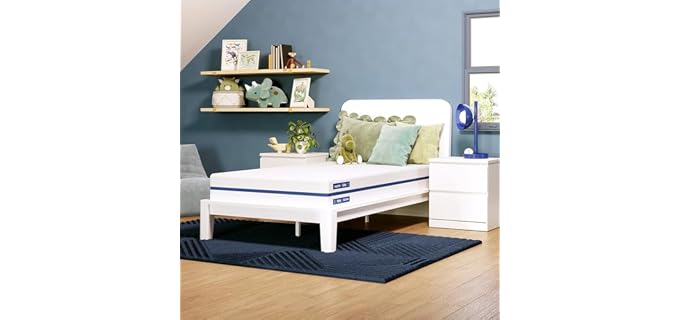
- Best for: parents who want a mattress made for children, with a washable cover.
- It is an 8-inch memory foam mattress with two sides. The manufacturer recommends the firmer side for ages 3 to 7 and the softer side for ages 8 and up.
- The manufacturer says the foams are CertiPUR-US certified, the fabrics are OEKO-TEX STANDARD 100 certified, and the mattress is fiberglass-free.[5][6]
- The cover is removable and machine washable, and the manufacturer offers a 365-night trial.
- At 8 inches, check your bed’s maximum mattress thickness before using it on a bunk bed.[2]
2


- Best for: older children and teens on a standard bed frame.
- It is a 10-inch all-foam mattress with a medium feel, according to the manufacturer.
- The manufacturer says the foams are CertiPUR-US certified, the mattress is GREENGUARD Gold certified and fiberglass-free.[5][7]
- At 10 inches, it is meant for a standard bed frame; bunk beds list a maximum mattress thickness.[2]
3


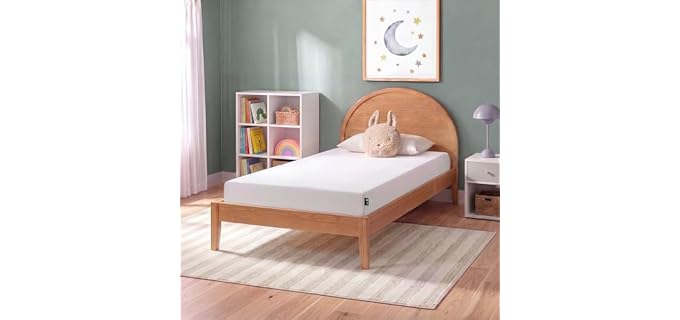
- Best for: bunk beds, trundle beds and daybeds.
- It is a 6-inch memory foam mattress with a medium-firm feel. The manufacturer says the foam is infused with green tea and charcoal and is CertiPUR-US certified.[5]
- The low profile suits beds with a thickness limit; check your bunk bed’s maximum first.[2]
4


- Best for: a firm, thin mattress for a bunk or trundle bed.
- It has 1 inch of gel memory foam infused with bamboo charcoal over 4 inches of base foam, with a firm feel, according to the manufacturer.
- The manufacturer says it is fiberglass-free and includes a 10-year limited warranty.
5


- Best for: younger children moving to a low twin, bunk or trundle bed.
- The manufacturer says the foam is CertiPUR-US certified.[5]
- The pink and blue terry cover versions include a moisture barrier, according to the manufacturer.
6


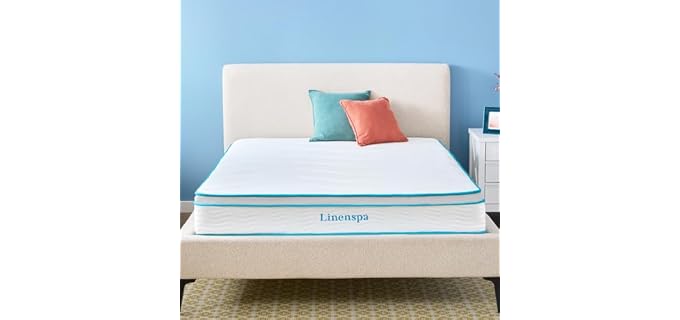
- Best for: older children who prefer the bounce of springs, on a standard bed frame.
- It combines memory foam with innerspring coils and has a medium-firm feel, according to the manufacturer.
- The manufacturer includes a 10-year limited warranty.
- At 10 inches, it is meant for a standard bed frame; bunk beds list a maximum mattress thickness.[2]
Comparison Table: Top Rated Twin Mattresses for Kids
| No. | Product | Image | Features | Brand |
|---|---|---|---|---|
| 1 | Nectar Kids Twin - Two-Sided Foam Mattress, Ages 3–12 |  |
| Nectar |
| 2 | Leesa Original Twin - 10-Inch Medium-Feel All-Foam Mattress |  |
| Leesa |
| 3 | Zinus Green Tea 6-Inch - Low-Profile Memory Foam for Bunk Beds |  |
| Zinus |
| 4 | Lucid 5-Inch Gel Foam - Firm, Low-Profile Fiberglass-Free Mattress |  |
| Lucid |
| 5 | Zinus 5-Inch Memory Foam - Thin Twin with Moisture Barrier |  |
| Zinus |
| 6 | Linenspa 10-Inch Hybrid - Memory Foam and Coil Hybrid | 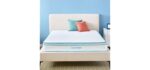 |
| Linenspa |
Sources
- American Academy of Pediatrics. Sleep-Related Infant Deaths: Updated 2022 Recommendations. Accessed October 14, 2026.
- eCFR. 16 CFR 1513.6: Bunk Beds, Instructions (Legal Information Institute). Accessed October 14, 2026.
- U.S. Consumer Product Safety Commission. Bunk Beds Business Guidance. Accessed October 14, 2026.
- eCFR. 16 CFR Part 1633: Standard for the Flammability (Open Flame) of Mattress Sets. Accessed October 14, 2026.
- CertiPUR-US. About Certified Foam. Accessed October 14, 2026.
- OEKO-TEX. OEKO-TEX STANDARD 100. Accessed October 14, 2026.
- UL Solutions. UL GREENGUARD Certification. Accessed October 14, 2026.
- U.S. Consumer Product Safety Commission. Recalls. Accessed October 17, 2026.
Update History
- Oct 2026: Product picks reviewed and updated; added a Key Specs table; added Sources (AAP, Cornell LII, CPSC, eCFR, CertiPUR-US, OEKO-TEX, UL)
- Sep 2026: Added Zinus Green Tea 6-Inch Bunk Bed Mattress and Linenspa 10-Inch Hybrid Mattress
- Feb 2022: Added Lucid 5-Inch Gel Foam Firm Mattress
- Oct 2019: Added Zinus 5-Inch Memory Foam Mattress
- Apr 2017: First published
