We may earn a commission when you buy through links on this page, at no extra cost to you; see our Affiliate Disclosure.
A mattress elevator raises the head end of your bed. For some people with sleep apnea, especially mild or position-related, sleeping with the head raised may reduce breathing problems a little. It is not a cure or a replacement for treatment. Under-mattress elevators, wedge pillows and bed risers are also used by people with acid reflux (GERD) or nasal congestion who prefer a raised head. So, let’s look at what elevation can and can’t do, and then at some mattress elevators available on Amazon.Disclaimer: This article is for general information and is not medical advice. A mattress elevator is not a treatment for sleep apnea. If you snore loudly, stop breathing or gasp in your sleep, or feel very sleepy in the day, see a doctor. Sleep apnea needs a diagnosis and a treatment plan.

Key Specs Compared
Numbers match the reviews below (tap to jump).
| # | Type | Placement | Lift | Material | Cover |
|---|---|---|---|---|---|
| 1 | Foam wedge | Under or on mattress | 7" (5" option) | CertiPUR foam | Washable |
| 2 | 2 interlocking wedges | Under mattress | 2.5" or 5" | Plastic | None (no cleaning needed) |
| 3 | Bed risers (set of 6) | Under bed legs | 5" | Plastic | None (no cleaning needed) |
| 4 | Contoured wedge pillow | On mattress | 8" | Gel memory foam + PU base | Removable, machine washable |
✓ yes · ✗ no · – not confirmed · Specs as stated on the Amazon listing or by the maker · Not a treatment for any condition
Before you buy
- See a doctor first. Untreated sleep apnea is linked to serious health problems. A sleep study, in a sleep lab or at home, is the way to find out if you have it and how severe it is.[1]
- CPAP is the leading treatment. The American Academy of Sleep Medicine says CPAP therapy is the leading treatment for sleep apnea.[2] Do not stop or replace CPAP or any other prescribed treatment with a wedge.
- Elevation may help some people a little. Raising the head of the bed may help some people with mild or position-related symptoms, alongside the treatment their doctor advises.[3][4]
- Leg swelling or vein problems: ask your doctor first. Researchers noted head-of-bed elevation may not suit people with leg swelling or venous insufficiency.[4]
- Bed risers: make sure the frame is stable and the risers sit flat, and only lift the head end as much as the instructions allow. Stop using them if the bed wobbles or a riser cracks.
Causes of Sleep Apnea
Obstructive sleep apnea is a condition in which the airway becomes blocked during sleep, leading to pauses in breathing or shallow breaths. Other symptoms include loud snoring, waking up repeatedly at night and feeling very sleepy in the day. When breathing stops, the body often responds with a sudden gasp or snort and briefly wakes up. Here are some common risk factors for obstructive sleep apnea:- Excess Weight – extra weight around the neck and throat makes it easier for the soft tissues to block the airway during sleep.
- Anatomy – a narrow airway, a large tongue or a small lower jaw can make sleep apnea more likely.
- Hormonal Conditions – conditions such as an underactive thyroid (hypothyroidism) or too much growth hormone (acromegaly) are linked to sleep apnea.
- Nasal Congestion – a blocked nose from allergies or other causes can make breathing at night harder.
- Large Tonsils – in children, enlarged tonsils and adenoids are a common cause of sleep apnea.
- Smoking and Alcohol – smoking and drinking alcohol in the evening are linked to a higher risk of sleep apnea.
How a Mattress Elevator May Help with Sleep Apnea
A mattress elevator (at the head) for sleep apnea is not a cure, but it may help some people a little, alongside the treatment their doctor advises. CPAP is the leading treatment for sleep apnea, and you should never stop or replace it with a wedge.[2]- Gravity – when you lie flat, the tongue and soft tissues can fall back toward the throat. Raising the head of the bed may help keep the airway a little more open. In a 2017 study, raising the head of the bed by about 7.5 degrees lowered breathing events by about a third on average, though about 4 in 10 people didn’t improve.[4]
- Comfort – broken sleep can make aches feel worse. A comfortable bed setup may make it easier to rest, but it doesn’t treat the apnea.
- Sleep Position – for people whose apnea is worse on their back, a doctor may suggest positional therapy, which keeps you off your back while you sleep.[3]
What the Research Says
- In a 2017 study of 52 people with obstructive sleep apnea, mostly mild to moderate, raising the head of the bed by about 7.5 degrees (blocks of about 6 inches under the head legs) lowered the number of breathing events per hour from a median of 15.7 to 10.7, about a third (31.8%) on average.[4]
- About 4 in 10 people in that study (20 of 52) did not improve. The study was small and not randomized, and the authors said the effect is likely smaller in severe sleep apnea.[4]
- For people whose apnea is worse on their back, a doctor may suggest positional therapy, which keeps you off your back while you sleep.[3]
Characteristics of a Good Mattress Elevator for Sleep Apnea
Here are the main features to look for.- Wedged or Inclined Surface – the key feature is a steady incline at the head of the bed. An under-mattress wedge keeps your pillow and sheets the same, while a wedge pillow sits on top and can let you slide down.
- Adjustable Beds – an adjustable base can raise the head of the bed at the touch of a button. For someone who needs a medical bed, see our hospital bed mattress topper guide.
- Bed Risers – blocks under the head legs of the bed frame. This is the method used in the 2017 study.[4] Make sure the frame is stable and the risers sit flat.
- Memory Foam – many wedges are made of foam or memory foam, sometimes with cooling gel. Makers’ claims about antimicrobial green tea, charcoal or bamboo infusions are theirs, not ours.
How we chose these products
We did not test these products ourselves. We compared them using the research steps on our How We Research page:- Type and lift: we list where each product goes and how much lift the maker gives.
- Recall check: we searched the CPSC recall database for each brand and for bed wedges and risers.[5]
- Availability: each product was listed as in stock on Amazon when we last checked (October 2026).
1


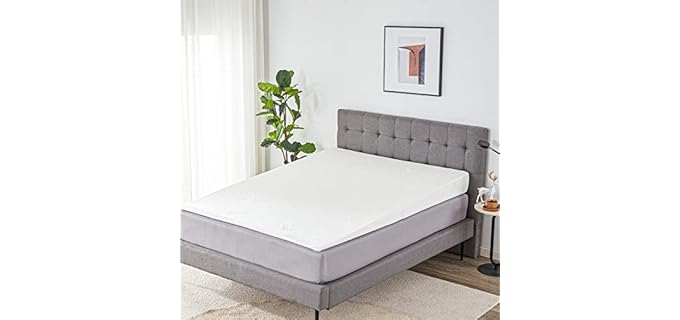
- Best for: raising the whole head end of a queen mattress.
- It is a foam wedge that goes under the mattress for a 7-inch lift (a 5-inch version is also sold). It can also go on top of the mattress.
- The maker says the foam is CertiPUR certified and the cover is washable, with a non-slip bottom.[6]
- It ships rolled, so let it expand for 24 to 72 hours before use.
2


- Best for: a firm plastic lift between the mattress and the box spring.
- The two-pack gives about 2.5 inches of lift side by side, or 5 inches when interlocked, depending on the mattress. The maker gives an 8-degree slope.
- Because it is plastic, there is no cover to wash and no foam smell.
3


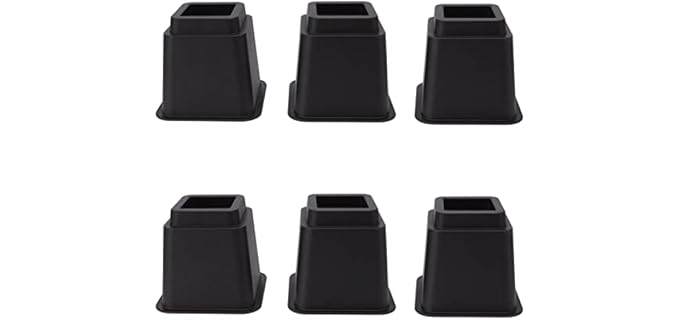
- Best for: tilting the whole bed, similar to the method used in the 2017 study.[4]
- Put the risers under the head-end legs only to tilt the bed. They add 5 inches of lift.
- The listing describes them as high-strength plastic but gives no weight limit.[7] Check that your bed legs fit the riser cups and the frame is stable before you sleep on it, and stop using them if the bed wobbles or a riser cracks.
4


- Best for: side sleepers who want a wedge pillow on top of the mattress.
- It is 35 x 24 x 8 inches, with a polyurethane foam base and gel memory foam on top.
- The cover is removable and machine washable.
Index Table: Mattress Elevators and Wedges
| No. | Product | Image | Features | Brand |
|---|---|---|---|---|
| 1 | Lazyzizi Mattress Elevator - Seven-Inch Foam Wedge Under Mattress |  |
| Lazyzizi |
| 2 | Wellness Wedge Under-Mattress Wedge - Two Interlocking Plastic Wedges Under Mattress |  |
| Wellness Wedge |
| 3 | Glomora 5-Inch Bed Risers - Set of Six Plastic Bed Risers |  |
| Glomora |
| 4 | Avana Contoured Bed Wedge - Gel Memory Foam Wedge Pillow |  |
| Avana |
Sources
- American Academy of Sleep Medicine, Sleep Education. Obstructive Sleep Apnea. Accessed October 17, 2026.
- American Academy of Sleep Medicine, Sleep Education. CPAP. Accessed October 14, 2026.
- American Academy of Sleep Medicine, Sleep Education. Positional Therapy. Accessed October 14, 2026.
- Souza FJFB, et al. The influence of head-of-bed elevation in patients with obstructive sleep apnea. Sleep Breath. 2017;21(4):815-820. PMID 28647854. Accessed October 14, 2026.
- U.S. Consumer Product Safety Commission. Recalls. Accessed October 17, 2026.
- CertiPUR-US. About Certified Foam. Accessed October 16, 2026.
- Amazon. Glomora 5-Inch Furniture Risers, Set of 6 (listing). Accessed October 17, 2026.
Update History
- Oct 2026: Cited the AASM sleep apnea page for sleep study advice; added the 2017 study figures; added bed riser stability cautions; filled the Glomora cover cell; renumbered citations in order of use; added Sources (AASM Sleep Education, Amazon)
- Oct 2026: Product picks reviewed and updated; added a Key Specs table; added Sources (AASM Sleep Education, PubMed Central, CertiPUR-US)
- Aug 2020: Added Wellness Wedge Under-Mattress Wedge and Avana Contoured Bed Wedge
- Mar 2017: First published

Very informative article , i had used the Avana mattress elevator and its really very comfortable. Now i am planning to buy a new one and this time on your recommendation i will try Hollander as due to my back ache doctors recommended me 5 inch elevation
Can you use your mattress elavator with an adjustable bed frame?
Hi Karen,
Yes, you can.
But when you have an adjustable bed frame, you can lift the head section as much as you need, without having to purchase a mattress elevator.