We may earn a commission when you buy through links on this page, at no extra cost to you; see our Affiliate Disclosure.
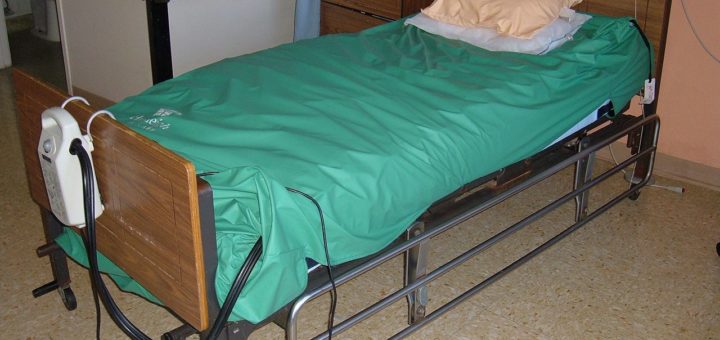
An alternating-pressure air pad or a foam mattress topper can make a bed more comfortable for someone recovering from surgery or illness. We have compiled some things to remember before getting a hospital bed mattress topper. Also, go through the list of products to help you choose the right bed pad. A topper is only one part of preventing bedsores (pressure injuries) during long stays in bed; regular repositioning and skin checks matter most.Disclaimer: This article is for general information and is not medical advice. No topper or pad treats or cures pressure injuries (bedsores). If you care for someone who is bedridden, ask their doctor, nurse or wound-care team which support surface they need.
Key Specs Compared
Numbers match the reviews below (tap to jump).
| # | Type | Thickness | Pump | Weight limit | Waterproof |
|---|---|---|---|---|---|
| 1 | Alternating air, 130 cells | 3" | Included | 300 lb | ✓ |
| 2 | Alternating air, 130 cells | 3.5" | Included | 350 lb | ✓ |
| 3 | Alternating bubble pad | 2.5" | Included | 275 lb | Not stated |
| 4 | Low air loss replacement, 20 cells | 8" cells | Included | 350 lb | Water resistant |
| 5 | Gel memory foam | 3" | None (foam) | Not stated | ✗ |
| 6 | Gel memory foam, 5 zones | 2" | None (foam) | Not stated | ✗ |
| 7 | Swirl gel memory foam | 1.5" | None (foam) | 250 lb (twin) | ✗ |
| 8 | Egg-crate foam | 4" | None (foam) | Not stated | ✗ |
✓ yes · ✗ no · – not confirmed · Specs as stated on the Amazon listing or by the maker · Not a treatment for any condition
A topper does not replace repositioning or medical care
- Keep changing position. People who cannot move on their own should usually be repositioned every 1 to 2 hours, even on a special mattress or pad.[1][2]
- Ask about the right surface. Guidance says people at risk should be placed on a pressure-redistributing surface. Someone who already has a pressure injury, or is at high risk, may need a medical support surface chosen by their care team, not a store-bought topper.[2]
- Check the skin every day, especially over the hips, tailbone, heels, elbows and shoulder blades. Call the doctor or nurse if you see redness that does not fade, blisters, open skin or drainage.[1]
- Keep the head of the bed low (30 degrees or less) unless a doctor says otherwise, to reduce sliding and shear.[1][2]
- Check for “bottoming out”. Slide a flat hand under the pad below the hips. If you feel less than about an inch of support, the surface is not doing its job.[3]
- Follow the instructions for powered pads and the advice of the care team. Watch for alarms, leaks and pump failures.
What the Guidance Says
MedlinePlus (from the U.S. National Library of Medicine) and the Agency for Healthcare Research and Quality (AHRQ) describe the same basics for preventing pressure injuries: change position often, use a foam, gel or air surface that spreads out pressure, keep the skin clean and dry, eat well and check the skin every day.[1][2] A support surface is one part of that plan. It can lower the pressure on bony areas, but it does not remove the need for turning, skin checks and medical follow-up.Buying Considerations For Mattress Topper for Hospital Bed
A good mattress topper will last a long time. Before buying, here are some things to remember. If the person is bedridden, has fragile skin or already has a pressure injury, ask the care team first.[2]- Texture – Mattress toppers come in various textures, like smooth covers, egg-crate designs and air cells. Pick the one that will be most comfortable for the patient.
- Material – You will find mattress toppers made of foam, gel, vinyl, polyester, wool and nylon. For incontinence, a wipe-clean waterproof surface or cover is easier to keep clean.
- Size – Hospital beds are usually about 35 to 36 inches wide and 80 inches long, close to twin XL. Pick the size closest to the mattress so it fits snugly without gaps. A thick topper raises the sleeping surface, so make sure bed rails are still high enough and no gaps open up between the mattress and rails.
- Air-Pump – For air pads, make sure the pump is durable and quiet so the patient can rest. Check the maximum user weight, and watch for alarms, leaks and pump failures.
Benefits Of Mattress Topper for Hospital Bed
Here is what a mattress topper can and can’t do for a patient.- Comfort – A mattress topper adds an extra layer of comfort for the patient.
- Pressure – An alternating air pad moves pressure around the body, and foam spreads weight. This can lower the pressure on bony areas, but it doesn’t treat pain or replace turning.[1]
- Recovery – Comfortable rest is helpful, but a topper doesn’t speed up recovery. Follow the care team’s plan. You may also look at a mattress topper for pregnancy for other comfort needs.
- Bedsore Prevention – A pressure-redistributing surface is one part of preventing pressure injuries, together with repositioning every 1 to 2 hours, skin checks and good nutrition.[1][2]
Types of Hospital Bed Toppers and Pads
- Egg-crate (convoluted) foam – inexpensive and light. It adds comfort but is thin and can flatten over time.
- Memory foam and gel memory foam – contours to the body and spreads weight. Thicker foam is less likely to bottom out.
- Alternating-pressure air pads – a pump inflates and deflates rows of air cells in turns, so pressure moves around the body.
- Low air loss systems – air cells with a cover that lets air flow to help manage heat and moisture. These are usually full mattress replacements used under medical guidance.
Features Of Hospital Bed Mattress Topper
Look for the following features in a mattress topper for a hospital bed, so it can serve you or your loved one longer.- Air-Flow – Look for channels or a cover that lets air flow, to help manage heat and moisture.
- Thickness – Thicker foam is less likely to “bottom out”. Slide a flat hand under the pad below the hips; if you feel less than about an inch of support, the surface isn’t doing its job.[3]
- Set-Up – The pad should be easy to set up, with a pump that can hang on the bed frame and controls that are easy to reach.
- Easy-Wash – Get a topper with a removable, machine-washable or wipe-clean cover, and clean it as the maker says.
How we chose these toppers
We did not test these products ourselves. We compared them using the research steps on our How We Research page:- Type and thickness: we list the type, thickness and pump details the maker gives.
- Recall check: we searched the CPSC recall database for each brand and for mattress pads and toppers.[4]
- Availability: each product was listed as in stock on Amazon when we last checked (October 2026).
1


- Best for: caregivers whose care team has suggested an alternating-pressure pad for home use.
- It is an alternating-pressure pad with 130 air cells and a variable-pressure pump. It lies on top of an existing mattress.
- The maker says the vinyl pad is waterproof and supports up to 300 lb.
- Set the pressure as the instructions and the care team advise, and keep repositioning on schedule.[2]
2


- Best for: a budget alternating-pressure pad for a home or hospital bed.
- It has 130 air cells, an electric pump and several pressure settings.
- The maker says it is waterproof, heat-sealed and holds up to 350 lb.
- Check the pad for leaks and the pump for alarms or failures every day.
3


- Best for: a simple alternating pad with a one-button pump.
- The bubble pad measures 34 x 78 x 2.5 inches and the maker says it inflates and deflates in a 5-minute pattern.
- The vinyl surface wipes clean, and the maker lists a 275 lb weight limit.
- At 2.5 inches it is thin, so do the hand check for bottoming out.[3]
4

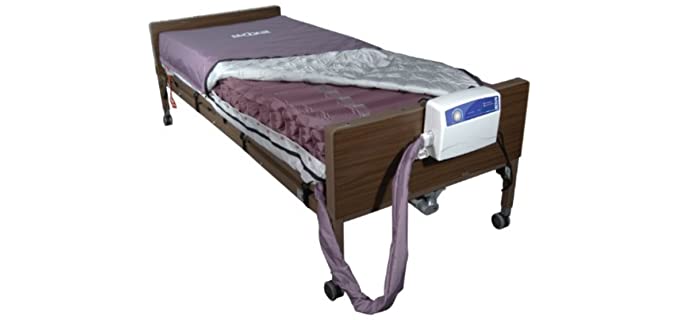
- Best for: home care when the care team recommends a powered air mattress instead of a topper.
- This is a full mattress replacement, not a topper. It has 20 replaceable 8-inch air cells, alternating pressure and a vapor-permeable cover.
- The maker says it has an audio and visual alarm for low pressure.
- Use it only with guidance from the person’s doctor, nurse or equipment supplier.
5


- Best for: adding comfort to a home hospital bed for someone who can still change position.
- It is 3 inches of gel-infused memory foam in twin XL size.
- The maker says the foam is CertiPUR-US certified.[5]
- It has no waterproof surface, so use a waterproof mattress protector if needed.
6


- Best for: a thin topper with different zones for the shoulders, hips and legs.
- It is 2 inches of gel memory foam with five raised zones, and it can be used with either side up.
- The maker says the foam is CertiPUR-US certified.[5]
7


- Best for: choosing a foam thickness; it comes in 1.5, 2, 3 and 4 inches.
- The table shows the 1.5-inch version. For extra support, a thicker size is less likely to bottom out.
- The maker says the foam is CertiPUR-US certified and that the twin size supports up to 250 lb.[5]
8


- Best for: a low-cost foam pad to add comfort.
- It is 4-inch convoluted foam that measures 33 x 72 inches, so it is shorter than a typical 80-inch hospital bed mattress.
- Egg-crate foam is light and can flatten with use. Replace it when it no longer springs back.
Index Table: Hospital Bed Mattress Toppers
| No. | Product | Image | Features | Brand |
|---|---|---|---|---|
| 1 | Vive Alternating Pressure Pad - 130-Cell Air Pad With Quiet Pump |  |
| Vive |
| 2 | Medical King Alternating Pressure Pad - Air Pad for Home Hospital Beds |  |
| Medical King |
| 3 | Lumex AQ1000 Pad - Alternating Bubble Pad and Pump System |  |
| Lumex |
| 4 | Drive Medical Med-Aire System - Low Air Loss Mattress Replacement System |  |
| Drive Medical |
| 5 | Linenspa 3-Inch Gel Topper - Twin XL Gel Memory Foam Topper |  |
| Linenspa |
| 6 | Lucid 5-Zone Gel Topper - Two-Inch Zoned Gel Foam Topper |  |
| Lucid |
| 7 | Zinus Swirl Gel Topper - Cooling Swirl Gel Memory Foam Topper |  |
| Zinus |
| 8 | DMI Egg Crate Topper - Four-Inch Convoluted Foam Mattress Pad |  |
| DMI |
Sources
- MedlinePlus, U.S. National Library of Medicine. Preventing pressure ulcers. Accessed October 14, 2026.
- Agency for Healthcare Research and Quality. Preventing Pressure Ulcers in Hospitals: What are the best practices in pressure ulcer prevention? Accessed October 14, 2026.
- Agency for Healthcare Research and Quality. Preventing Pressure Ulcers in Hospitals: Tools and Resources. Accessed October 14, 2026.
- U.S. Consumer Product Safety Commission. Recalls. Accessed October 17, 2026.
- CertiPUR-US. About Certified Foam. Accessed October 16, 2026.
Update History
- Oct 2026: Product picks reviewed and updated; added a Key Specs table; added Sources (MedlinePlus, AHRQ, CertiPUR-US)
- Jul 2020: Added Linenspa 3-Inch Gel Topper and Lucid 5-Zone Gel Topper
- Apr 2020: First published
