We may earn a commission when you buy through links on this page, at no extra cost to you; see our Affiliate Disclosure.
Are you struggling to doze off lately? Various things, like room temperature and pillow size, come into play. Many people also find that a pleasant scent helps them relax at bedtime. Making little tweaks to your good night routine, like adding a sleep spray, may make your bedtime feel calmer. Many sleep sprays contain lavender and other essential oils. Research on whether they actually improve sleep is still limited.[1] Let’s look at what we know.Disclaimer: This article is for general information and is not medical advice. Sleep sprays are fragrance products, not a treatment for insomnia, anxiety or depression. If trouble sleeping lasts, talk to a doctor.

Key Specs Compared
Numbers match the reviews below (tap to jump).
| # | Size | Scent / oils | Use on | Made in USA |
|---|---|---|---|---|
| 1 | 8.4 fl oz | Lavender, chamomile, vetivert | Pillow, bed linen | Not stated |
| 2 | 4 fl oz | Lavender, chamomile | Pillows, linens, room | Not stated |
| 3 | 8 oz | Organic lavender oil | Bed, pillow | Yes |
| 4 | 8 fl oz | Lavender, chamomile, witch hazel, jojoba | Bedding, towels, room | Yes |
✓ yes · ✗ no · – not confirmed · Specs as stated on the Amazon listing or by the maker · Not a treatment for any condition
What Essential Oils to Look For in a Sleep Spray
Essential oils are concentrated oils extracted from parts of plants such as flowers, leaves, roots and stems. Many people use them for their scent at bedtime. Here are common ones you’ll find in sleep sprays:- Lavender – The most common sleep-spray scent. It’s unclear whether aromatherapy with lavender oil helps with anxiety, stress, depression or sleep quality, but some people report feeling better when they use it.[1]
- Chamomile – A mild, apple-like floral scent often paired with lavender.
- Vanilla – Aside from being part of cakes and ice creams, vanilla is a warm, sweet scent many people find comforting at night.
- Rose – One of the best-known floral scents. Many people find it soothing before bedtime.
- Jasmine – A strong floral scent. Use a light hand if you are sensitive to fragrance.
Safety tips for sleep sprays (NIH NCCIH)
- Breathing it in: aromatherapy with lavender oil is considered possibly safe, but it may cause headache or coughing.[1] Stop using a spray that bothers you, and spray away from your face.
- On the skin: topical lavender products may cause allergic skin reactions in some people. Only put a spray on your skin if the label says it is made for skin, and patch test a small area first.[1]
- Older bottles: linalool, a main scent compound in lavender oil, reacts with air over time, and the oxidized form is a common cause of fragrance skin allergy.[2][3] Keep the cap closed and replace old bottles.
- Kids and pets: keep sprays out of reach. Cats are especially sensitive to essential oils, so don’t spray near pets or their bedding, and keep them out of the room until the spray has dried.[4]
- Medicines: lavender might interact with some sedative drugs or herbs. Ask your doctor or pharmacist if you take any.[1]
- Trouble sleeping for weeks? See a doctor. Long-lasting insomnia can be treated.[5]
Benefits of Sleep Sprays
Nothing’s more frustrating than being unable to get some sleep at night. A sleep spray won’t fix the cause, but it can be a simple, pleasant part of a wind-down routine.- Part of a Routine – Using the same scent every night can become a cue that it’s time to wind down, alongside a regular bedtime and a dark, cool, quiet bedroom.[5]
- Easy to Use – There are no hard and fast rules; take off the lid and spray a little. Just like snoring chin straps, you can carry it anywhere, whether it’s a long trip or a weekend away.
- Smells Great – Sleep sprays smell nice and can make your bedding feel fresher.
What the Research Says
- Studies on lavender aromatherapy for sleep and anxiety are small and mixed. More high-quality research is needed to know whether it works.[1]
- We found no good studies on commercial pillow sprays themselves.
- Proven ways to sleep better include a regular sleep schedule and, for long-lasting insomnia, treatment from a doctor such as cognitive behavioral therapy for insomnia.[5]
How to Use Sleep Sprays
Follow the directions on the label. Most sleep sprays are made for fabrics and the air in your room.- Spray on Pillow – Spray onto fabric, not skin, and let it dry before you lie down. Open a window or run a fan if the scent feels strong.
- Don’t Use It in a Diffuser – Sprays are not made for diffusers. If you want a diffuser, use a product made for it and follow its directions.
- Skin Use – A few sprays are labeled as body mists. Only use a spray on skin if the label says so, and test a small area first.[1]
- Spray in Living Space – You can also mist curtains or the room air. Keep sprays away from children and pets, and don’t spray near open flames.
How we chose these sprays
We did not test these products ourselves. We compared them using the research steps on our How We Research page:- Scent, size and intended use: taken from the maker’s listing.
- Recall check: we searched the CPSC recall database for each brand.[6]
- Availability: each product was listed as in stock on Amazon when we last checked (October 2026).
Reviews: Sleep Sprays
1


- Best for: a large bottle of a well-known pillow spray.
- It is an 8.4 fl oz pillow spray with lavender, chamomile and vetivert essential oils. Spritz the pillow before bed.
- The maker’s sleep claims are its own; independent research on pillow sprays is limited.[1]
2


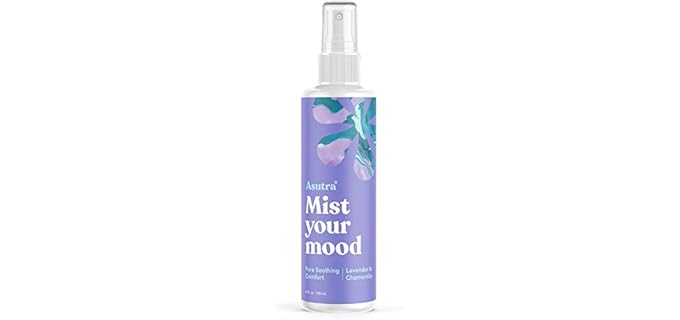
- Best for: one spray for the pillow, bedding and room.
- It is a 4 fl oz lavender and chamomile essential oil mist for pillows, linens, curtains and room air.
- The maker says it can also be used as a light body mist; test a small area of skin first.[1] The listing calls it safe to use around pets; that is the maker’s claim, so keep it away from cats.[4]
3


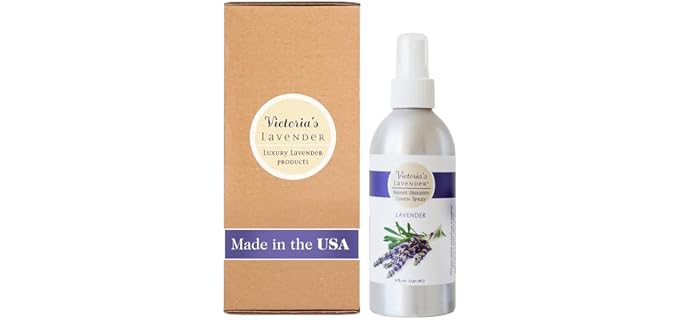
- Best for: people who want a plain lavender scent.
- It is an 8 oz linen and pillow spray made with organic lavender essential oil, handmade in Oregon, per the listing.
4


- Best for: a gentle mist for linens and the room.
- It is a lavender and chamomile linen mist with witch hazel and jojoba oil, made for bedding, pillows, towels and room air.
- The maker says it is made in the USA.
Index Table: Sleep Sprays
| No. | Product | Image | Features | Brand |
|---|---|---|---|---|
| 1 | This Works Deep Sleep - Lavender Chamomile Vetivert Pillow Spray Value |  |
| This Works |
| 2 | Asutra Lavender Chamomile - Multi-Use Room Linen and Pillow Mist |  |
| Asutra |
| 3 | Victoria's Lavender Linen Spray - Organic Lavender Oil Linen and Pillow Spray |  |
| Victoria's Lavender |
| 4 | DRMTLGY Lavender Mist - Lavender Chamomile Linen and Room Mist |  |
| DRMTLGY |
Sources
- National Center for Complementary and Integrative Health (NCCIH). Lavender. Accessed October 15, 2026.
- Hagvall L, et al. Lavender oil lacks natural protection against autoxidation, forming strong contact allergens on air exposure. Contact Dermatitis. 2008;59(3):143-150. PMID: 18759894. Accessed October 17, 2026.
- Christensson JB, et al. Air-oxidized linalool: a frequent cause of fragrance contact allergy. Contact Dermatitis. 2012;67(5):247-259. Accessed October 17, 2026.
- ASPCA. Pet Poisons: Be Mindful of These Household Products and Cleaning Agents. Accessed October 17, 2026.
- National Heart, Lung, and Blood Institute (NHLBI). Insomnia: Treatment. Accessed October 15, 2026.
- U.S. Consumer Product Safety Commission. Recalls. Accessed October 15, 2026.
Update History
- Oct 2026: Product picks reviewed and updated; added a Key Specs table; added Sources (NIH NCCIH, NHLBI, CPSC); checked every spray against its listing; added safety tips on patch testing, ventilation, oxidized lavender oil and pets (Contact Dermatitis studies, ASPCA); filled in the Key Specs
- Feb 2022: Added DRMTLGY Lavender Mist
- Feb 2021: First published
