We may earn a commission when you buy through links on this page, at no extra cost to you; see our Affiliate Disclosure.
Lower back pain (LBP) is one of the most common health problems worldwide, and if you have it, you’ll want anything that helps you sleep better. A new mattress won’t cure back pain, but the right one may make you more comfortable at night, and research gives some useful pointers. We’ll break down what the research says about mattresses for lower back pain and share tips to ease your mattress-hunting struggles.Disclaimer: This article is for general information and is not medical advice. A mattress is not a treatment for back pain. See a doctor if your pain lasts more than a few weeks, follows a fall or injury, or comes with numbness, weakness, fever or trouble urinating.

Key Specs Compared
Numbers match the reviews below (tap to jump).
| # | Construction | Height | Feel | Certification | Fiberglass-free |
|---|---|---|---|---|---|
| 1 | Hybrid, 7" encased coils | 12" | Medium | CertiPUR-US | Not confirmed |
| 2 | Gel memory foam | 10" | Medium | CertiPUR-US | Yes (maker claim) |
| 3 | Gel memory foam | 12" | Medium | CertiPUR-US | Yes (maker claim) |
| 4 | Hybrid, Talalay latex + pocket coils | 8" | Firm | OEKO-TEX cover | Yes (maker claim; rayon fire barrier) |
✓ yes · ✗ no · – not confirmed · Specs as stated on the Amazon listing or by the maker · Not a treatment for any condition
Back Pain and Mattress – What’s The Connection?
LBP is one of the most common causes of disability. It has many possible causes, including muscle strains, disc problems, arthritis, posture, weak core muscles and other medical conditions.[1] Sleep position and an uncomfortable mattress can add to morning stiffness, so it’s worth checking whether your mattress is part of the problem. The time when the pain occurs is your first clue. If your back aches when you first wake up but eases once you get moving, your mattress may be worth a look, especially if it’s old or sagging. Morning stiffness can also be a sign of other conditions, so mention it to your doctor if it keeps happening.[1] Do you find yourself waking up often in the night or tossing and turning? That’s a second clue that your bed may not be comfortable for you. A mattress that suits your body and sleep position may help you sleep in a more comfortable position. It is not a treatment, so talk to your doctor about the pain itself.Which Mattress Material Eases Back Pain?
The best material depends on what feels comfortable to you and on your sleep position – back, side, or stomach. Memory Foam: A memory foam mattress contours to your body and spreads out pressure. Many people with back pain find it comfortable, but there’s no proof that memory foam itself reduces lower back pain. Latex: Latex feels more buoyant than memory foam. It gives surface cushioning while staying supportive, and it is often more expensive. Innerspring and Hybrid: Coil mattresses, especially hybrids with pocketed coils under foam, give full-body support with a bouncier feel.Choose The Right Mattress To Ease Lower Back Pain
When choosing a mattress for LBP, consider a few things. The best evidence we have comes from a 2003 trial of 313 adults with chronic lower back pain: after 90 days, those given a medium-firm mattress improved more in pain in bed and disability than those given a firm one.[2] A later review of 39 studies came to a similar conclusion.[3] Three rules to remember: 1) A very firm mattress isn’t automatically better for your back; 2) A very soft mattress can let your hips sag; 3) Medium-firm is a good starting point for many people. Back sleepers often do well on a medium-firm mattress that supports the lower back and still contours a little. For side sleepers, you need a mattress that cushions the shoulders and hips. A medium or medium-firm feel often works well. Stomach sleepers usually need a slightly firmer surface so the hips don’t sink too far. Most of us sleep in a mix of positions, so we move a lot in the night. Medium-firm foam or hybrid mattresses with good motion isolation can suit ‘combination sleepers.’ When to see a doctor about back pain
What the Research Says
- In a randomized trial of 313 adults with chronic lower back pain, a medium-firm mattress led to more improvement in pain and disability than a firm one.[2]
- A review of 39 studies concluded that medium-firm mattresses promote comfort, sleep quality and spinal alignment, though the studies varied a lot.[3]
- No mattress has been shown to cure back pain. Choose one you find comfortable and use the trial period if one is offered.
How we chose these mattresses
We did not test these products ourselves. We compared them using the research steps on our How We Research page:- Type, height, feel and certifications: taken from the maker’s listing. CertiPUR-US foam is tested for certain chemicals and emissions.[4]
- Recall check: we searched the CPSC recall database for each brand.[5]
- Availability: each product was listed as in stock on Amazon when we last checked (October 2026).
Reviews: Mattresses for Lower Back Pain
1


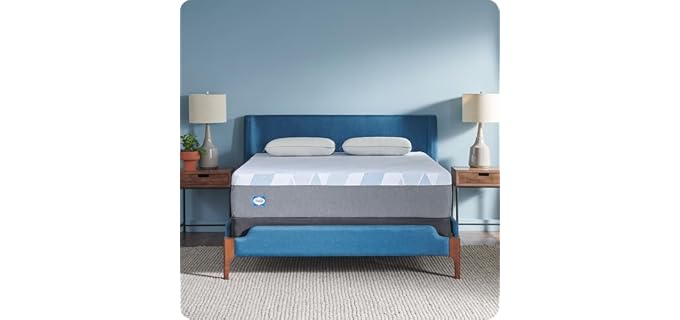
- Best for: a hybrid with foam over pocketed coils.
- It has 2 inches of gel memory foam and 2.25 inches of transition foam over 7-inch individually encased coils.
- The maker says the foam is CertiPUR-US certified.[4] The listing gives a medium feel. It does not say whether the mattress is fiberglass-free or name its fire barrier, so we list that as not confirmed.[6]
2


- Best for: a medium all-foam mattress at a lower price.
- It has 3 inches of gel foam, a 1.5-inch transition layer and a 5.5-inch high-density base.
- The maker says it is made in the USA with U.S. and global parts, is fiberglass-free, and uses CertiPUR-US certified foam, with a 10-year limited warranty.[4][7]
3


- Best for: a thicker all-foam bed in a box.
- It has 2 inches of gel memory foam and 3 inches of comfort foam over 7 inches of support foam.
- The maker says the foam meets CertiPUR-US standards and the mattress does not contain fiberglass, with a fiberglass-free flame-retardant cover.[4][8]
4


- Best for: people who want a firmer latex hybrid.
- It has a Talalay latex top layer over individually encased pocket coils, with a firm feel.
- The listing describes it as firm, and some buyers call it extra firm. That is firmer than the medium-firm feel that did best in the 2003 trial,[2] so it may suit stomach sleepers or people who already know they like a firm bed; side sleepers may need a topper. The maker says the fire barrier is rayon and lists no fiberglass.[9] Health and circulation claims on the listing are the maker’s, not ours.
Index Table: Mattresses for Lower Back Pain
| No. | Product | Image | Features | Brand |
|---|---|---|---|---|
| 1 | Sealy Dreamlife Hybrid - Twelve Inch Gel Foam Hybrid Mattress |  |
| Sealy |
| 2 | LUCID 10 Inch Gel - Medium Feel Gel Memory Foam Mattress |  |
| LUCID |
| 3 | Vibe Gel Memory Foam - Twelve Inch Gel Memory Foam Mattress |  |
| Vibe |
| 4 | Sunrising Bedding Latex Hybrid - Eight Inch Natural Latex Hybrid Mattress |  |
| Sunrising Bedding |
Sources
- National Institute of Arthritis and Musculoskeletal and Skin Diseases (NIH). Back Pain. Accessed October 15, 2026.
- Kovacs FM, Abraira V, Peña A, et al. Effect of firmness of mattress on chronic non-specific low-back pain: randomised, double-blind, controlled, multicentre trial. Lancet. 2003;362(9396):1599-1604. PMID 14630439. Accessed October 15, 2026.
- Caggiari G, Talesa GR, Toro G, et al. What type of mattress should be chosen to avoid back pain and improve sleep quality? Review of the literature. J Orthop Traumatol. 2021;22:51. PMID 34878594. Accessed October 15, 2026.
- CertiPUR-US. About Certified Foam. Accessed October 15, 2026.
- U.S. Consumer Product Safety Commission. Recalls. Accessed October 15, 2026.
- Amazon. Sealy Dreamlife 12″ Hybrid Mattress (listing). Accessed October 17, 2026.
- Amazon. LUCID 10 Inch Gel Memory Foam Mattress, Medium (listing). Accessed October 17, 2026.
- Amazon. Vibe Gel Memory Foam Mattress, 12-Inch (listing). Accessed October 17, 2026.
- Amazon. Sunrising Bedding 8″ Natural Latex Hybrid Mattress (listing). Accessed October 17, 2026.
Update History
- Oct 2026: Removed an unsourced morning-stiffness time frame; checked fiberglass-free and Made in USA claims against the listings (Sealy fiberglass-free now not confirmed); noted the Sunrising firm feel against the medium-firm evidence; filled the Key Specs table; renumbered citations in order of use; added Sources (Amazon listings)
- Oct 2026: Product picks reviewed and updated; added a Key Specs table; added Sources (NIAMS, peer-reviewed studies, PubMed Central, CertiPUR-US, CPSC)
- Feb 2026: Added LUCID 10 Inch Gel Foam Mattress
- Oct 2019: Added Vibe Gel Memory Foam Mattress
- Apr 2019: First published
